
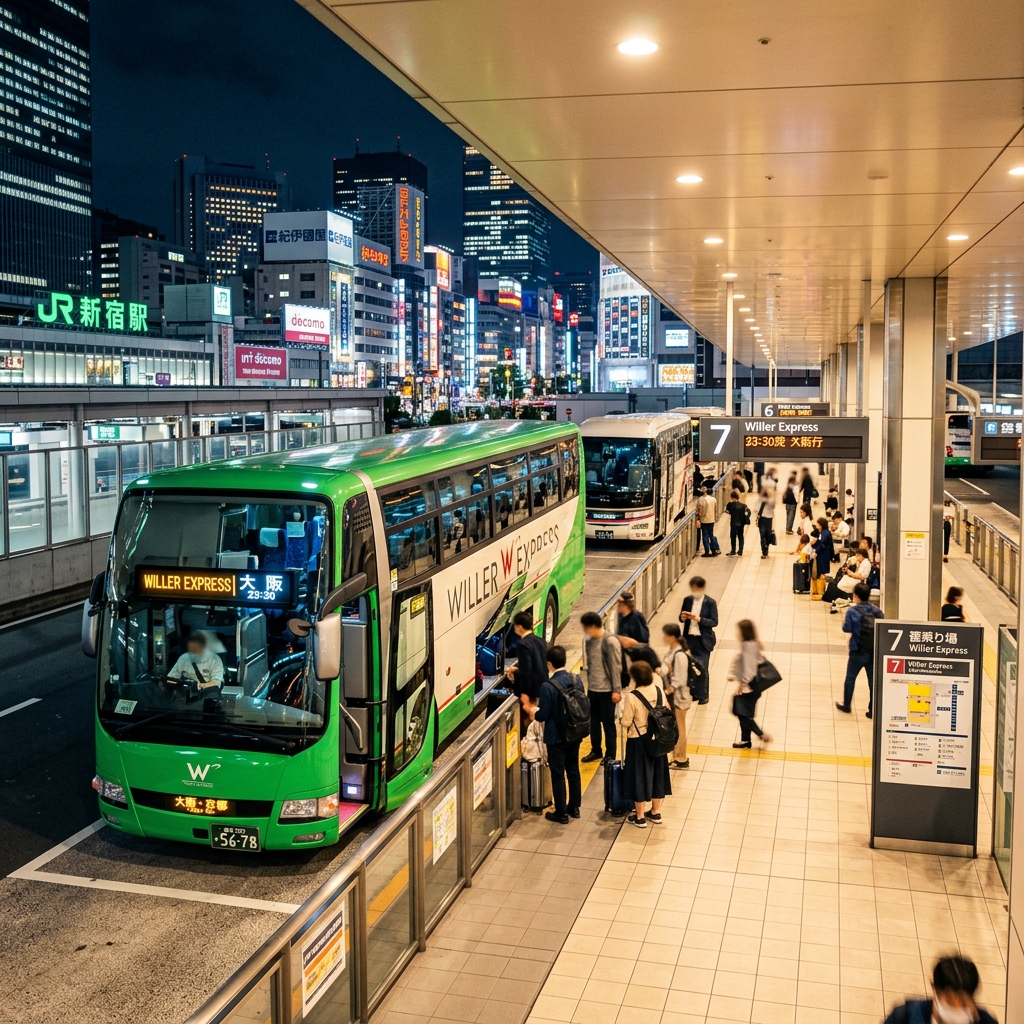
Japan has one of the world's most efficient public transport networks, but the cost of Shinkansen (bullet train) tickets and daily subways can quickly consume a student budget. Fortunately, if you know where to look, there are massive discounts, seasonal tickets, and alternative travel modes available. In this guide, we will break down the best transit hacks to help you explore Japan without breaking the bank.
Quick-Reference: Budget Transit Options Compared
Here is an overview of the most budget-friendly transport methods for long-distance travel in Japan:
| Travel Method | Average Cost (Tokyo to Osaka) | Pros | Cons |
|---|---|---|---|
| Night Bus (e.g., Willer Express) | 3,500 – 8,000 JPY | Saves one night of accommodation, direct routes | Long travel time (8+ hours), sleeping can be tough |
| Seishun 18 Ticket (Seasonal) | 2,410 JPY per day (12,050 JPY pack) | Unlimited local train travel nationwide | Slow, only available during university holidays |
| Regional JR Pass | Varies by region (10,000 – 25,000 JPY) | Unlimited Shinkansen in selected zones | Only available to temporary visitors (some student restrictions) |
| JR Student Discount (Gakuwari) | Approx. 11,500 JPY (Shinkansen) | 20% off base fare for long-distance JR trips | Requires official certificate from your school |
1. Night Buses: The Ultimate Accommodation and Transit Hack
If you want to travel between major cities like Tokyo, Osaka, Kyoto, or Hiroshima, overnight highway buses are the cheapest option. Booking a seat on a night bus not only costs a fraction of a bullet train ticket but also saves you the cost of a hotel room for the night.
Providers like Willer Express offer modern buses with canopy hoods for privacy, power outlets, and ladies-only rows. Booking in advance can yield tickets for as low as 3,500 JPY one-way.
2. The Legendary Seishun 18 Ticket (青春18きっぷ)
The Seishun 18 Ticket is a seasonal ticket pack sold by the JR Group during university vacation periods (spring, summer, and winter). It costs 12,050 JPY and contains five daily passes.
- How it works: Each pass gives you one full day of unlimited travel on local and rapid JR trains across Japan. One daily pass can be shared among a group of friends traveling together.
- The cost: It breaks down to just 2,410 JPY per day. While a trip from Tokyo to Kyoto will take about 9 hours and multiple train transfers, the savings are unmatched.
3. JR Student Discount (Gakuwari - 学割)
If you are enrolled in a registered Japanese language school, college, or university, you are eligible for the Gakuwari (学割) student discount. This discount cuts 20% off the base fare (Joshaken) for any JR train trip exceeding 100 kilometers one-way.
How to obtain it: Visit your school's administration office and request a Student Travel Discount Certificate (Gakuwari-sho). Present this certificate at a JR Ticket Office (Midori-no-Madoguchi) when purchasing your ticket. You must carry your student ID during the trip.
4. Commuter Passes (Teikiken - 定期券) for Daily Savings
If you commute to school daily, buying individual train tickets or scanning your IC card (Suica/Pasmo) will quickly add up. Instead, purchase a Commuter Pass (Teikiken).
These passes offer unlimited travel between your home station and your school station for a flat rate (available in 1-month, 3-month, or 6-month durations). Students are eligible for a heavily discounted student commuter pass, which can save up to 50% compared to regular commuter passes. You will need a commuter certificate stamped by your school to buy one.
5. Regional JR Passes
While the National JR Pass experienced a major price hike and is generally restricted to temporary tourists, many regional passes (such as the JR East Pass or JR Kyushu Pass) offer incredible value. Check the official JR company websites to see if your visa category allows you to purchase these regional variants, as some passes are open to all foreign passport holders residing in Japan.
6. Plan Your Travel Budget
Exploring Japan is a key part of the student experience, but transport costs must be planned. To model your travel expenses alongside your monthly food, rent, and tuition fees, use our interactive yuzu.help Student Budget Calculator to find the perfect balance between living and traveling.
Frequently Asked Questions
Q: What is the Seishun 18 Ticket?
The Seishun 18 Ticket is a seasonal JR ticket pack that offers 5 days of unlimited travel on local and rapid trains across Japan for 12,050 JPY (2,410 JPY per day).
Q: Can foreign students buy the regular Japan Rail Pass (JR Pass)?
Generally, no. The National JR Pass is restricted to tourists entering Japan under the "Temporary Visitor" visa status. Students on student visas are not eligible, but they can buy select regional JR passes.
Q: How do I get the 20% JR Student Discount (Gakuwari)?
You must request a Student Travel Discount Certificate (Gakuwari-sho) from your school's office, and present it along with your student ID at a JR Ticket Counter.
Q: Does the JR Student Discount apply to the Shinkansen?
Yes. The 20% student discount applies to the base fare portion of your Shinkansen ticket, though it does not apply to the express fee (tokkyuken) portion.
Q: What is a Teikiken commuter pass?
A Teikiken is a transit pass that allows unlimited travel between your home station and your school/work station for a flat fee over a 1, 3, or 6-month period.
Q: Is it cheaper to book Willer Express night buses early?
Yes. Willer Express offers early-bird discounts (called "Early Bird Plan") which can reduce ticket prices by 10% to 30% compared to last-minute bookings.
Q: Are commuter passes valid on weekends and intermediate stations?
Yes. You can use your commuter pass on weekends, and you can get off at any station along the route between your starting and destination stations without paying extra.
Q: What is the cheapest way to travel from Tokyo to Osaka?
The cheapest method is a night highway bus, which starts at around 3,500 JPY. Traveling via local trains with a Seishun 18 pass is also very cheap at 2,410 JPY per day, but it takes 9 hours.