
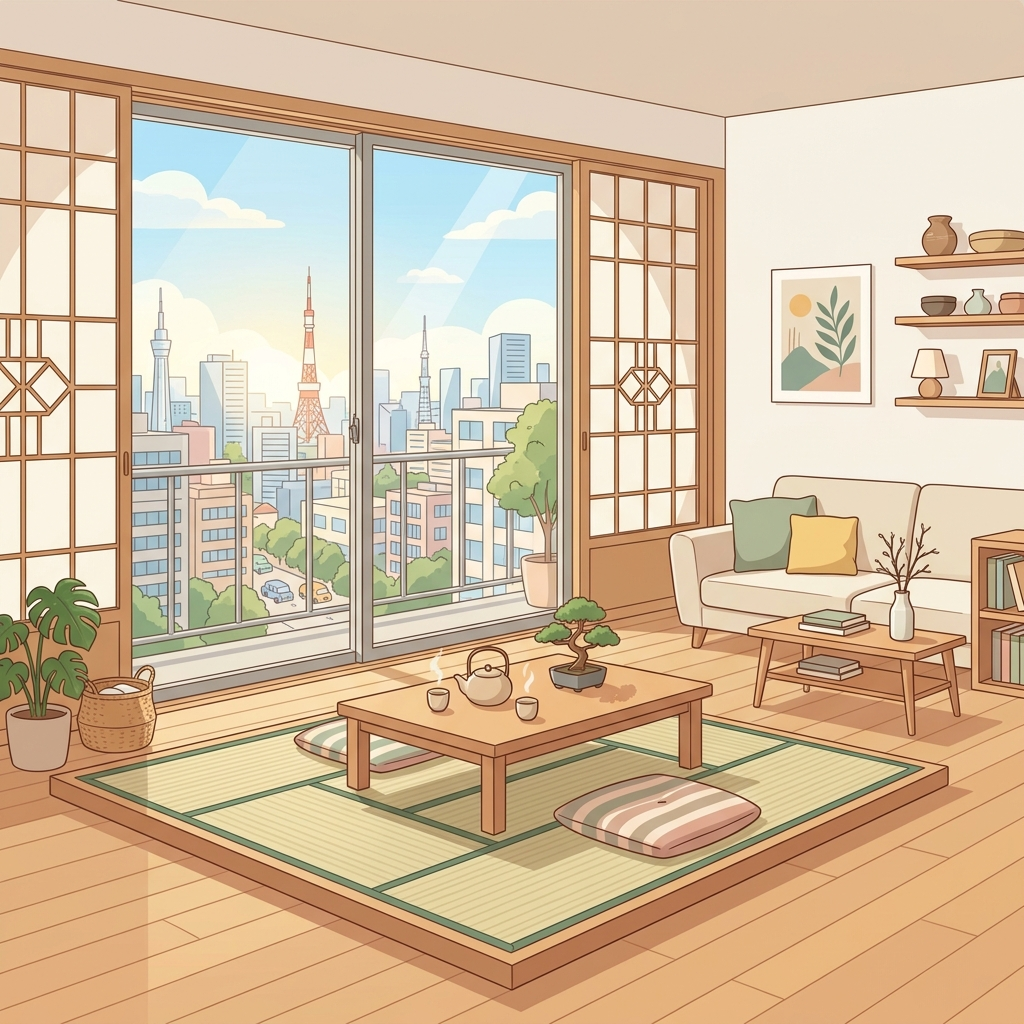
Finding a place to live is one of the most exciting yet challenging aspects of moving to Japan. The Japanese rental market is notorious for its complex procedures, unique vocabulary, and steep upfront costs. For international students and expats, language barriers and strict screening processes can make the task feel even more daunting. This comprehensive guide breaks down everything you need to know about renting an apartment in Japan, explaining the mysterious upfront fees, guarantor requirements, and practical alternatives like share houses.
1. Decoding the Upfront Costs: What to Expect
Unlike many Western countries where you only pay a deposit and the first month’s rent, moving into a Japanese apartment requires several unique, non-refundable fees. Typically, you should prepare 4 to 6 months of rent in advance as your initial startup cost.
- Shikikin (敷金 - Deposit): Usually equivalent to 1 or 2 months' rent. This is refundable, but cleaning fees or damage repairs will be deducted from it when you move out.
- Reikin (礼金 - Key Money): A mandatory, non-refundable "gift" paid to the landlord, usually equivalent to 1 or 2 months' rent. This is a traditional custom in Japan, though some modern apartments advertised as "zero key money" exist.
- Chukai Tesuryo (仲介手数料 - Agent Fee): The commission paid to the real estate agency, typically capped at 1 month's rent plus tax.
- Guarantor Fee (保証料 - Hoshou-ryo): If you do not have a Japanese guarantor (which most expats do not), you must pay a guarantor company. This fee is usually 50% to 100% of one month's rent initially, plus a minor yearly renewal fee.
- Fire Insurance & Key Exchange Fee: Mandatory insurance (around 15,000 to 20,000 JPY for 2 years) and lock-changing fee (around 10,000 to 20,000 JPY).
2. The Guarantor System (L guarantor / Joint Guarantor)
To rent a private apartment in Japan, landlords require a guarantor (連帯保証人 - Rentai Hoshounin). The guarantor agrees to pay your rent if you default. Historically, this had to be a Japanese citizen with a stable income.
Today, most agencies require foreigners to use a Guarantor Company (保証会社 - Hoshou Kaisha). The real estate agency will submit your application to the guarantor company they partner with. During the screening, they will verify your income, visa status, and ability to pay rent. Some companies may call you to conduct a short interview in Japanese or English.
3. Choosing the Right Housing Option
Depending on your budget, duration of stay, and language level, you can choose between several types of housing:
| Housing Type | Pros | Cons | Best For |
|---|---|---|---|
| Private Apartment (Chintai) | Complete privacy, custom furnishings, choice of location. | High upfront fees, 2-year contract lock-in, requires utility setup. | Long-term residents (1+ years) wanting independence. |
| Share House | Low upfront costs, fully furnished, utilities included, social community. | Shared kitchen/bathrooms, less privacy, house rules. | Students, short-term stays, and newly arrived expats. |
| Monthly Mansion / Serviced Apartment | Fully furnished, flexible monthly contracts, English support. | Very high monthly rent, limited availability. | Business travelers, corporate relocations. |
4. Essential Tips for a Successful Search
To ensure your apartment hunting goes smoothly, keep these tips in mind:
- Look for Expat-Friendly Agencies: Regular Japanese agencies might refuse foreign applicants due to language barriers. Use agencies specialized in helping foreigners (such as GaijinPot Housing, Plaza Homes, or Oakhouse).
- Understand the "2-Year Rule": Standard lease agreements in Japan are for 2 years. Breaking the lease in the first year often incurs a penalty of 1 month's rent.
- Check "Walking Time" to Station: Real estate listings calculate walking time based on a standard speed of 80 meters per minute. A "10-minute walk" is highly accurate and usually means the station is close.
- Factor in "Kyoeki-hi" (Maintenance Fee): Monthly rent listings usually separate base rent from the building maintenance fee. Make sure to calculate your total monthly payment as rent + maintenance fee.
Conclusion
Renting an apartment in Japan requires research and financial preparation, but with the right agency and clear understanding of the fees, it is fully manageable. If you are staying short-term or want to save money, starting out in a share house is a great way to transition into Japanese life before committing to a private lease. Happy home hunting!