
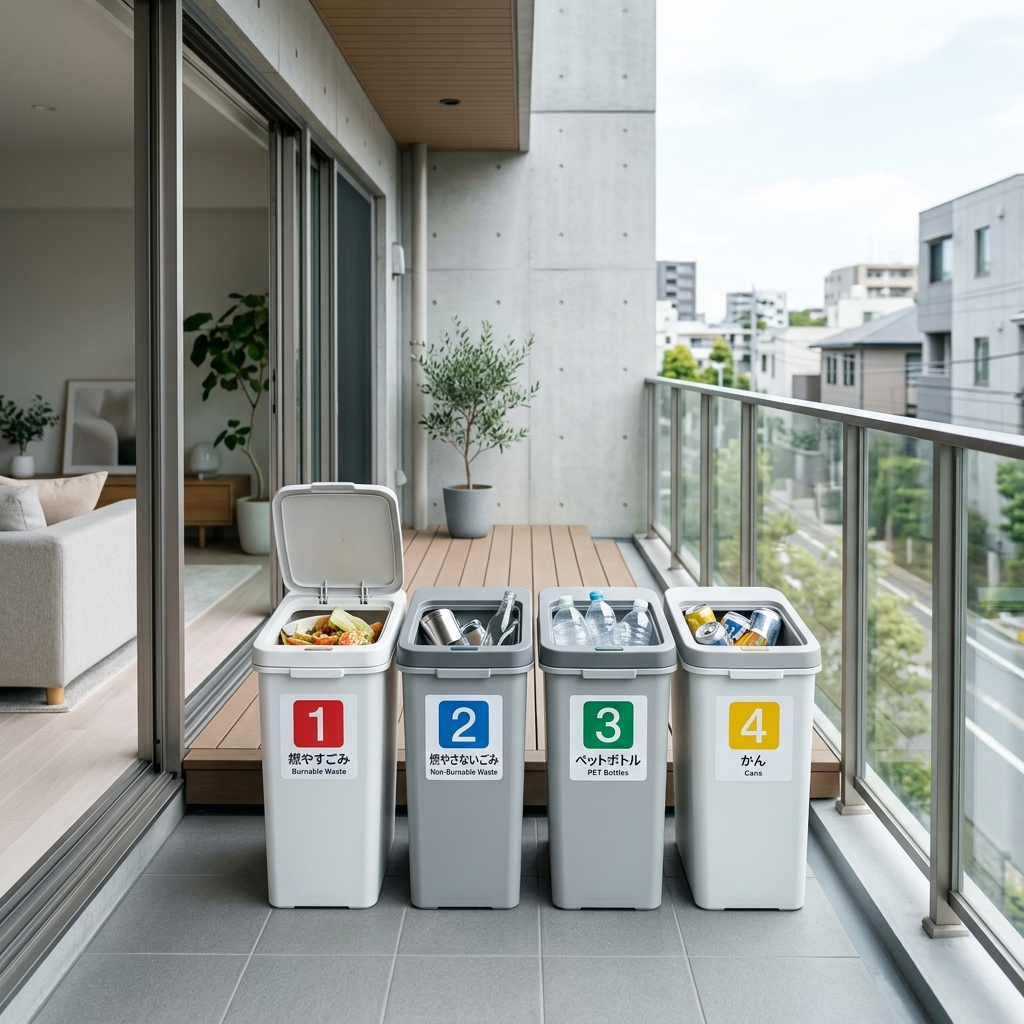
One of the most common culture shocks for new expats and international students in Japan is the complex garbage sorting system. Unlike many Western countries where trash is thrown into one or two general bins, Japan requires residents to carefully divide waste into multiple specific categories. Each city and ward has its own collection schedule, bag requirements, and disposal guidelines. Getting it wrong can lead to neighbors returning your trash, warning stickers on your bags, or even fines from your landlord. This guide makes garbage sorting simple and stress-free.
Quick-Reference: Major Trash Categories in Japan
While exact rules depend on your local municipality, trash is generally divided into these four main categories:
| Category | Typical Items | Bags to Use | Collection Frequency |
|---|---|---|---|
| Burnable (Moeru Gomi) | Food waste, paper, small plastic wraps, clothes, leather items | Designated municipal bags or clear/semi-translucent bags | 2 times per week |
| Non-Burnable (Moenai Gomi) | Glassware, ceramics, light bulbs, small metal utensils, small appliances | Clear bags (to show contents clearly) | 1 or 2 times per month |
| Recyclables (Shigen Gomi) | PET bottles, aluminum cans, glass bottles, cardboard, newspapers | Separated by type in baskets or tied in bundles | 1 time per week |
| Oversized (Sodai Gomi) | Furniture, bicycles, large luggage, mattresses (items over 30cm) | Requires special stickers; does not go in standard bins | By appointment only |
1. Burnable vs. Non-Burnable Waste
Burnable waste (Moeru Gomi or Kanen Gomi) is incinerated at high-tech local plants. This includes all food scraps (which must be drained of water), tissue paper, and dirty plastic wrappers that cannot be cleaned. Non-burnable waste (Moenai Gomi or Fukanen Gomi) consists of materials that cannot be safely burned, such as glass, metal products, and ceramics.
2. Preparing Recyclables (PET, Cans, and Paper)
Japan is highly efficient at recycling, but residents must prepare materials before disposal:
- PET Bottles: You must remove the plastic cap and peel off the plastic label (both go into plastics/burnable trash). Rinse the bottle, flatten it, and place it in the designated neighborhood recycling bin.
- Cans and Glass Bottles: Rinse thoroughly. Do not crush cans. Place them in separate colored crates provided on collection day.
- Cardboard: Flatten all boxes, stack them, and tie them securely using paper twine (Suzuran tape). Do not put cardboard in plastic bags.
Pro Tip: Large trash items like furniture, microwaves, or futons are classified as Sodai Gomi. You cannot simply throw them out. You must book a collection online or by phone with your local Ward Office, purchase a "Sodai Gomi Disposal Ticket" (available at convenience stores), stick it on the item, and place it outside on the scheduled day.
3. Where to Find Official Garbage Schedules
Each municipal ward issues an annual calendar showing exactly which days of the week each trash type is collected. You can obtain a printed copy in English, Chinese, or Korean when registering your address at the Ward/City Office (Kuyakusho/Shiyakusho). For digital guidelines, check the official website of your local municipality or search for the Tokyo Clean Authority rules if you live in the capital.
4. Master Your Neighborhood Layout with yuzu.help
Finding the local garbage collection point (Gomi Okiba) for your apartment building or neighborhood block is essential. Many neighborhoods share a communal collection spot covered by nets to prevent crows from scattering the trash. Check the yuzu.help Neighborhood Map to locate local ward offices, public recycle drop-offs, and home goods stores where you can purchase trash cans and cleaning supplies.
Frequently Asked Questions
Q: What happens if I put my garbage out on the wrong day?
The collection workers will leave the bag behind and attach a bright warning sticker indicating the error. You must take the bag back inside and put it out on the correct day.
Q: Can I use black plastic trash bags in Japan?
No. Most municipalities require clear or semi-translucent bags so collectors can verify that the contents have been sorted correctly and do not contain hazardous materials.
Q: Where do I buy the designated garbage bags?
You can buy them at supermarkets, convenience stores, and drugstores. Look for bags marked with your specific city or ward name.
Q: How do I dispose of cooking oil in Japan?
You must not pour cooking oil down the drain. You should solidify it using an oil hardening powder (Katameru Temple) or soak it up with newspapers and throw it in the burnable trash.
Q: How do I dispose of a broken plate or drinking glass?
Wrap the broken shards in thick newspaper, write "Kiken" (Dangerous) clearly on the paper, and place it in the non-burnable trash bin.
Q: What is the maximum size for standard trash before it becomes Sodai Gomi?
In most wards, any item whose longest side exceeds 30 centimeters (roughly 12 inches) is classified as oversized trash and requires a special collection fee.
Q: Are spray cans and gas canisters considered non-burnable?
Yes, but they must be completely empty to prevent explosions in the collection trucks. Some cities require you to puncture a hole in them before disposal.
Q: Can I dispose of old electronics like laptops and TVs in the trash?
No. Under the Home Appliance Recycling Act, items like TVs, washing machines, refrigerators, air conditioners, and computers must be recycled through the retailer or specialized collection services.