
Finding accommodation in Japan can be one of the most stressful parts of relocation. Traditional Japanese apartment renting is notorious for high upfront costs, including "key money" (reikin), agent commissions, and the absolute requirement of a guarantor. For students, digital nomads, and expats staying for a few months to a year, these barriers make standard contracts impractical. Instead, most turn to short-term housing options: share houses or serviced apartments.
This guide compares these two options, detailing the costs, social environment, and rental processes to help you find your ideal temporary home.
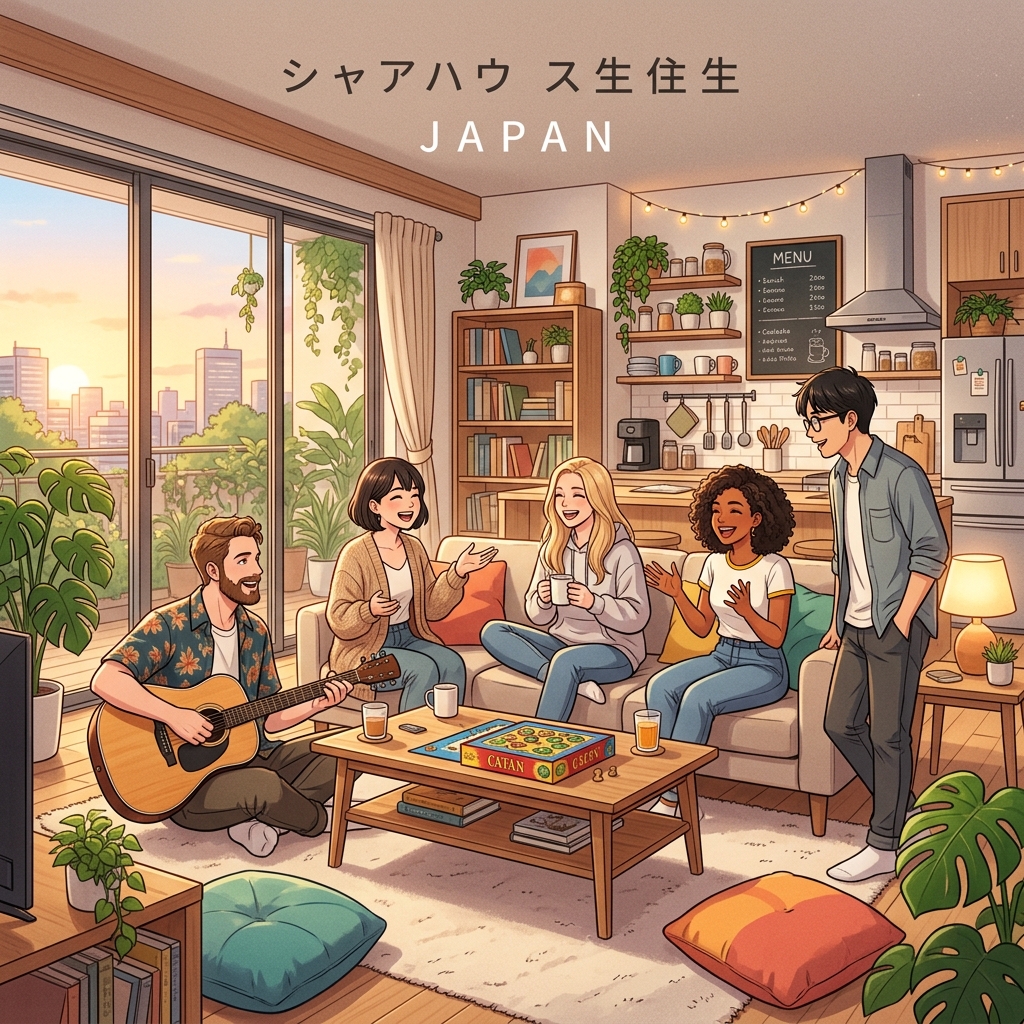
Quick Reference: Share Houses vs. Serviced Apartments
Here is a comparison of the key features of short-term housing alternatives in Japan:
| Feature | Share House | Serviced Apartment |
|---|---|---|
| Average Monthly Cost | 50,000 to 90,000 JPY (varies by area & room type) | 120,000 to 250,000+ JPY (highly location dependent) |
| Privacy Level | Medium (private room, shared kitchen, bath, & living room) | High (completely private studio or multi-room unit) |
| Minimum Stay | Typically 1 month | Typically 1 month (some offer weekly rentals) |
| Guarantor Required? | No | No |
| Upfront Fees | Low (usually a small deposit or administrative fee) | Moderate (deposit, cleaning fee, or admin fee) |
| Utilities & Internet | Included in monthly flat utility fee | Included in monthly rent or charged as flat fee |
| Social Life | High (opportunities for community events and language exchange) | Low (independent, hotel-like living) |
Pro Tip: Registering your address at the local Ward/City Office (Kuyakusho/Shiyakusho) is mandatory under Japanese law if you hold a Residence Card (Zairyu Card) and plan to stay for more than 3 months. Both share houses and serviced apartments allow this, but it is always best to double-check with the provider before signing. If you do move, remember to file an address change with Japan Post to forward your mail.
1. Share Houses: Community and Budget-Friendly Living
A share house (or guest house) is a co-living space where residents rent a private bedroom but share communal spaces like kitchens, dining areas, living rooms, shower rooms, and laundry facilities. Some rooms are dormitory-style, though private rooms are the most common.
- Pros: Affordable rent; low move-in costs; zero guarantor hassle; fully furnished; built-in social network.
- Cons: Shared bathrooms and kitchens; less personal space; noise from other residents; chores rules for shared areas.
- Popular Providers: Oakhouse, Borderless House, Social Apartment, and GG House.
For international students looking to improve their Japanese and make friends quickly, share houses are a top recommendation. They are also highly accessible to foreigners, with websites and customer support available in English.
2. Serviced Apartments: Privacy and Convenience
Serviced apartments (also called monthly mansions in Japan) are fully furnished private apartments designed for temporary stays. They function similarly to long-term hotel rooms, equipped with private kitchens, bathrooms, washing machines, and Wi-Fi.
- Pros: Complete privacy; quiet living environment; modern furnishings; hotel-like conveniences.
- Cons: Significantly more expensive than share houses; higher deposits and cleaning fees; limited community interaction.
- Popular Providers: MetroResidences, Hmlet, and Live Japan.
Serviced apartments are ideal for professionals, couples, and digital nomads who value quiet and privacy and have a higher budget. For guidelines from the Ministry of Land, Infrastructure, Transport and Tourism (MLIT) regarding rental safety and standards, check official government portals.
Budgeting and Neighborhood Selection
Short-term rentals can vary wildly in cost depending on the neighborhood. Central Tokyo areas like Shibuya and Shinjuku command high premiums, while residential neighborhoods further down the train lines offer much lower rates. If you are trying to calculate your overall expenses, use our interactive Japan Budget Calculator. If you want to explore different neighborhoods, cross-reference them with our Japan Neighborhood Map Tool. For long-term stays, read our guide on How to Rent an Apartment in Japan Without a Guarantor.
Frequently Asked Questions
Q: What is a share house in Japan?
A share house is a co-living arrangement where you rent a private bedroom but share communal spaces like the kitchen, living room, and bathrooms with other residents.
Q: Do I need a guarantor (guarantor company) for short-term housing?
No, most share houses and serviced apartments do not require a traditional Japanese guarantor, making them very accessible for foreign students and expats.
Q: Are utilities included in the rent for share houses and serviced apartments?
Yes, in most cases, utilities like electricity, water, gas, and high-speed internet are included in the monthly rent or charged as a flat utility fee.
Q: Can I register my address at a share house with the ward office?
Yes, if you hold a Residence Card (Zairyu Card) and stay for more than 3 months, you can legally register your share house address at the local Ward/City Office (Kuyakusho/Shiyakusho).
Q: What is the typical minimum stay for serviced apartments in Tokyo?
Serviced apartments usually have a minimum stay requirement ranging from 1 month to 3 months, though some providers offer weekly rentals at premium rates.
Q: Are share houses in Japan fully furnished?
Yes, share houses come fully furnished with bed frames, mattresses, desks, and shared appliances like washing machines, refrigerators, and microwaves.
Q: How much key money (reikin) do I need to pay for short-term rentals?
Unlike standard Japanese apartments, short-term rentals, share houses, and serviced apartments generally require zero key money (reikin) and zero agent fees.
Q: Is it easy to meet people if I live in a Japanese share house?
Yes, share houses are known for their social community, with many organizing regular events, parties, and cultural exchanges for local and international residents.
Disclaimer: The information provided in this article is for informational purposes only. Accommodation pricing, availability, and policies differ by provider and location. Always read the rental agreement carefully before making any deposits or signing contracts.