
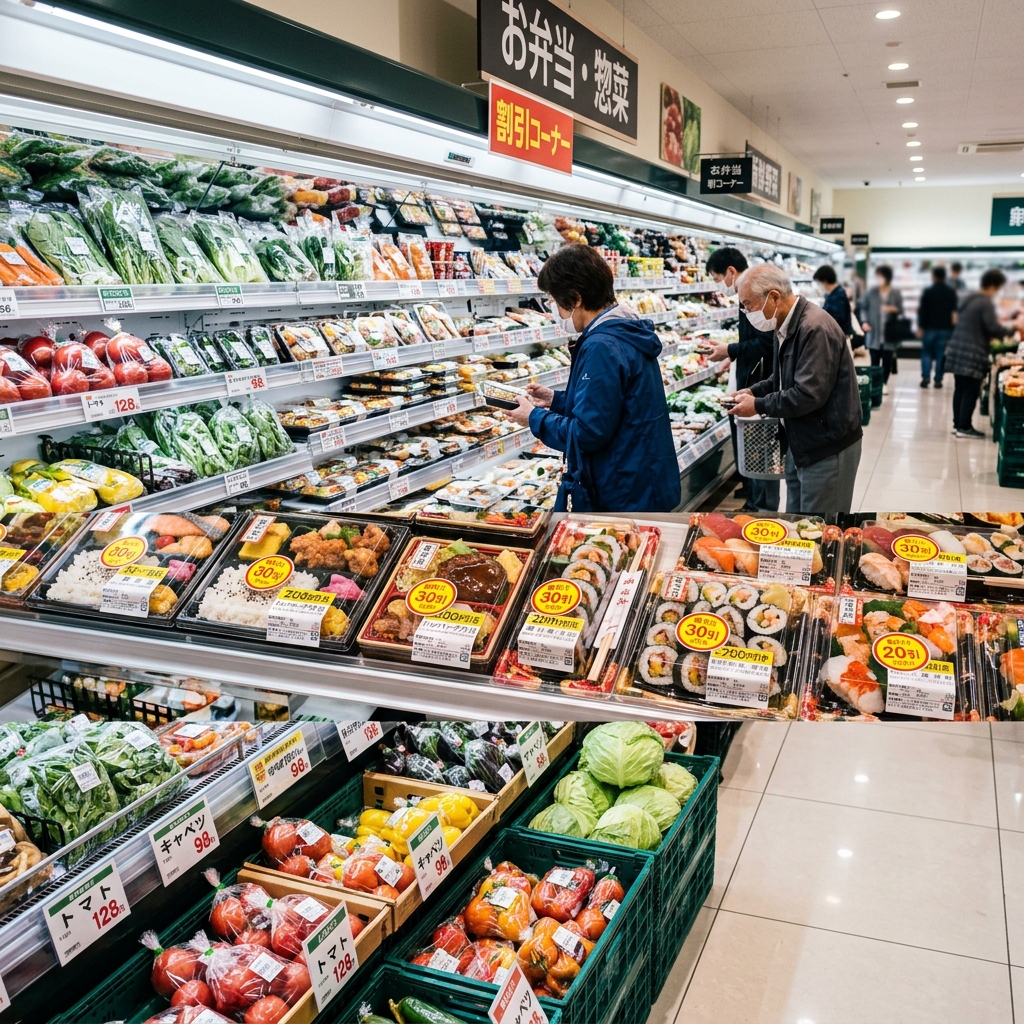
Moving to Japan as an international student is a thrilling adventure, but it also comes with the practical challenge of managing your daily expenses. While dining out in Tokyo or Osaka can quickly drain your wallet, cooking at home and shopping smart can keep your food budget surprisingly low. In this guide, we will break down the ultimate food-saving hacks, from identifying discount supermarkets to mastering the art of late-night discount stickers.
Quick-Reference: Japan Supermarket Comparison
Before you head out with your shopping bag, here is a quick overview of the most popular supermarket chains in Japan and what they are best for:
| Supermarket Chain | Price Range | Best For | Student Rating |
|---|---|---|---|
| Gyomu Super | Very Cheap | Bulk items, frozen vegetables, imported spices, frozen meat | ⭐⭐⭐⭐⭐ (Must-Visit) |
| OK Store | Cheap | Discounted brand products, cheap pizza, daily groceries | ⭐⭐⭐⭐⭐ (Highly Recommended) |
| Aeon / MaxValu | Moderate | Weekly deals, private brand (TopValu) items, wide variety | ⭐⭐⭐⭐ (Great for regular shopping) |
| Life Supermarket | Moderate to High | Fresh sashimi, ready-made bento boxes, high-quality produce | ⭐⭐⭐ (Good for late-night deals) |
1. Know Your Supermarkets: Where to Shop
Not all Japanese grocery stores are created equal. If you shop at high-end supermarkets like Seijo Ishii or Queen's Isetan, you will quickly exhaust your funds. Instead, look for these budget-friendly alternatives:
- Gyomu Super (業務スーパー): Recognizable by its bright green sign, this is a student's paradise. They specialize in wholesale-sized goods, frozen foods, and imported items at unbeatable prices.
- OK Store (オーケー): A popular discount supermarket chain in the Kanto region that offers low prices on everything, especially if you sign up for their free membership card.
- Aeon & MaxValu: These large chains feature their own budget-friendly private label called TopValu, which offers high-quality goods like milk, tofu, pasta, and bread at a fraction of the national brand cost.
2. Master the "Waribiki" (Discount Sticker) System
One of the easiest ways to save money on fresh food and pre-made meals (bento) is to learn when supermarkets mark down their prices. Staff will apply discount stickers, known as waribiki (割引), to items nearing their expiration dates.
Pro Tip: Look for the golden sticker that says 半額 (Hangaku). This means the item is 50% off! Other common stickers include 10% 割引, 20% 割引, or 30% 割引.
The timing of these markdowns varies, but they generally follow this schedule:
- Late Afternoon (5:00 PM – 6:00 PM): Minor discounts (10% to 20% off) start appearing on bentos and raw fish/meat.
- Late Night (7:30 PM – 9:00 PM or 1–2 hours before closing): This is when the 50% off (半額) stickers are applied. Keep in mind that competition can be fierce among local residents and students!
3. Focus on Cheap, Nutritious Staples
To keep your grocery bill low, build your meals around cheap, nutrient-dense ingredients that are widely available in Japan:
- Bean Sprouts (Moyashi - もやし): The ultimate budget savior. A bag of moyashi typically costs between 20 to 40 JPY.
- Tofu (豆腐): A great source of protein. A single block of tofu costs as little as 30 to 50 JPY at discount stores.
- Chicken Breast (Torimune-niku - 鶏むね肉): Significantly cheaper than beef, pork, or chicken thighs. It is perfect for meal-prepping.
- Eggs (Tamago - 卵): A pack of 10 eggs usually costs between 200 to 280 JPY and provides versatile protein options.
- Natto (納豆): Fermented soybeans that are incredibly healthy. A pack of three is usually around 80 to 100 JPY.
According to nutritional guidelines published by the Ministry of Agriculture, Forestry and Fisheries (MAFF), maintaining a balanced diet with local seasonal items is both cost-effective and beneficial for long-term health.
4. Plan and Track Your Expenses
Setting a food budget is critical. We recommend allocating around 25,000 to 35,000 JPY per month for groceries if you plan to cook at home most of the time. To help you calculate your monthly living costs, use our interactive yuzu.help Student Budget Calculator to track your expenses and discover hidden savings.
Frequently Asked Questions
Q: How much does a cheap supermarket meal cost in Japan?
A typical bento box at a discount supermarket costs between 300 to 500 JPY. If you buy it late at night with a 50% discount sticker, it can cost as little as 150 to 250 JPY.
Q: Is Gyomu Super open to the general public?
Yes, Gyomu Super is open to the general public. Anyone can shop there without a membership or commercial license.
Q: What does the "Hangaku" sticker mean?
The sticker 半額 (Hangaku) means "half-price". When stuck on a product, you will pay exactly 50% of the original retail price at the register.
Q: Are fruits and vegetables expensive in Japan?
Yes, fresh fruits (like melons and grapes) and out-of-season vegetables can be expensive. To save money, buy local, seasonal produce or opt for frozen vegetables at Gyomu Super.
Q: Should I bring my own shopping bags to Japanese supermarkets?
Yes. Most supermarkets charge 3 to 5 JPY per plastic bag. Bringing your own reusable eco-bag (eco-bagu) is a great way to save money and reduce plastic waste.
Q: Can I pay with a credit card at all discount supermarkets?
While major supermarkets like Aeon accept credit cards, some extreme discount stores and local vegetable shops (yaoya) only accept cash or local digital pay apps like PayPay.
Q: What is the cheapest source of protein in Japan?
Tofu, natto, eggs, and chicken breast (torimune-niku) are the most cost-effective and nutrient-dense protein sources available in Japanese grocery stores.
Q: Is tap water safe to drink in Japan?
Yes, tap water is completely safe to drink all over Japan. You can save money by drinking tap water or using a basic water filter pitcher instead of buying bottled water.