
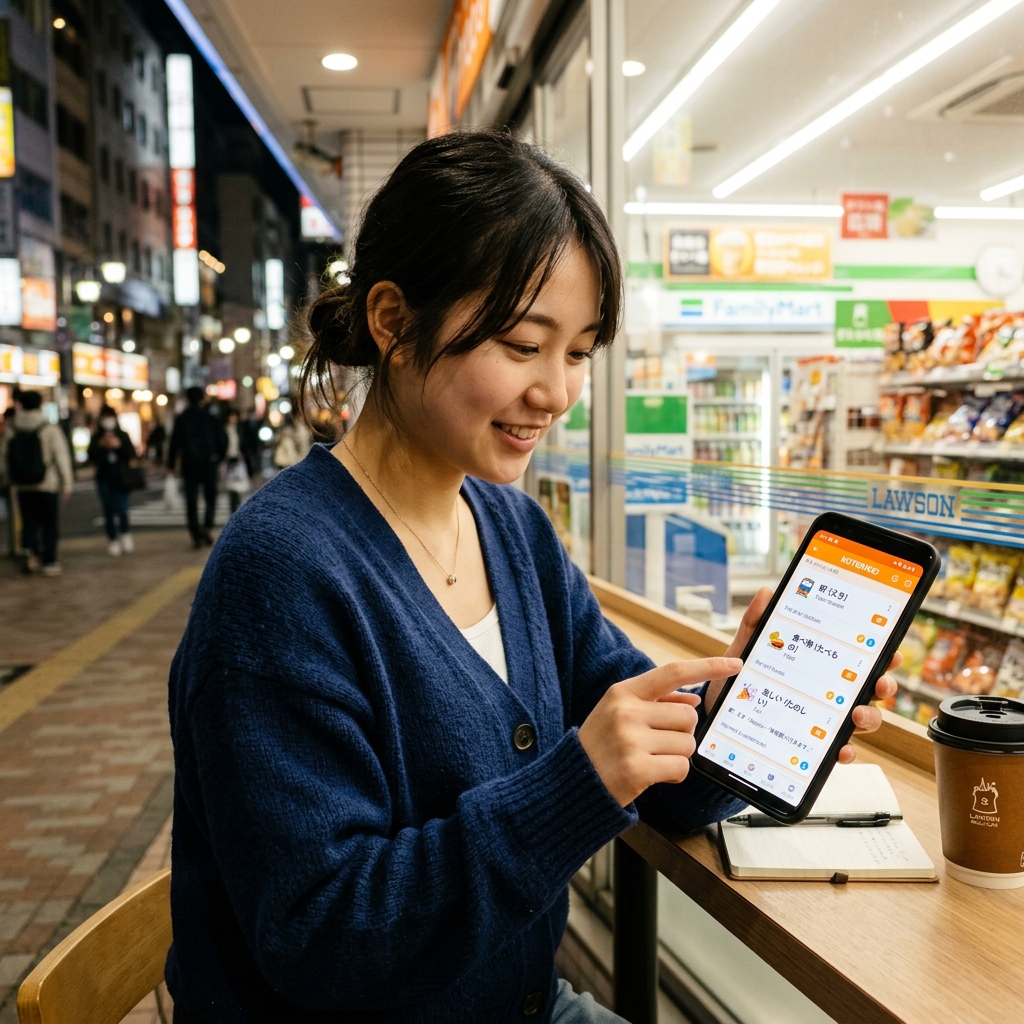
Arriving in Japan as an international student can feel overwhelming, especially if your Japanese is limited. While learning kanji takes years of study, surviving your daily interactions does not have to be painful. By mastering a few key cashier phrases, leveraging free community resources, and setting up the right smartphone apps, you can navigate life in Japan like a pro. This guide highlights the most pragmatic Japanese hacks for students.
Quick Reference: Cashier and Register Interactions
You will visit convenience stores (conbini) and supermarkets daily. Here are the most common questions staff will ask and how to answer them:
| What the Cashier Says | Romaji & Meaning | Your Best Response | Meaning of Response |
|---|---|---|---|
| 袋はご利用ですか? | Fukuro wa goriyou desu ka? (Do you need a bag?) |
はい, お願いします。 いいえ, 結構です。 |
Yes, please. No, thank you. |
| ポイントカードはお持ちですか? | Pointo kaado wa omochi desu ka? (Do you have a point card?) |
ないです。 あります。 |
I don't have one. I have one. |
| 温めますか? | Atatamemasu ka? (Would you like this heated up?) |
はい, お願いします。 大丈夫です。 |
Yes, please. No, it's fine. |
| お支払いはどうされますか? | O-shiharai wa dou saremasu ka? (How would you like to pay?) |
キャッシュ / 現金で。 ペイペイで。 |
By cash. By PayPay. |
1. Master Cashier Japanese: Avoid the "Daijoubu" Trap
When cashiers ask questions, many foreigners default to saying "Daijoubu" (大丈夫 - It's fine). However, daijoubu can mean both "Yes, please" and "No, thank you" depending on context, which often confuses shop staff.
Pro Tip: To avoid confusion at the register, use unambiguous phrases. If you want something, say Onegai shimasu (Please). If you do not want it, say Kekko desu (No, thank you) accompanied by a polite hand wave.
To practice more real-life scenarios, check out our interactive yuzu.help Japanese Survival Phrases Guide to listen to pronunciations and learn essential phrases for post offices, restaurants, and apartments.
2. Free Japanese Classes at Your Ward Office
Private language schools are expensive, and university classes can be highly academic. If you want to learn practical conversational Japanese for free or a very nominal fee (like 100 to 500 JPY per lesson), head to your local Ward Office (Kuyakusho).
Almost every local municipality in Japan hosts volunteer Japanese language classrooms (nihongo kyoushitsu) run by local residents. These classes are perfect for practicing speaking, meeting friendly locals, and getting help with reading official letters. For information about language support initiatives for foreign residents, check the official resources of the Agency for Cultural Affairs (ACA).
3. The Essential App Stack for Student Life
Technology is your best friend when navigating a new language. Make sure to download and set up these three essential apps immediately:
- DeepL: Far more accurate than Google Translate for Japanese grammar and polite nuances. Use the photo translation feature to read mail, utility bills, and packaging.
- Yomiwa: An incredible offline kanji dictionary. You can draw kanji characters on the screen or use your camera to translate specific words in real-time.
- Anki: A spaced repetition flashcard app. Create flashcards of words you see daily in Japan (like trash categories, train warnings, and supermarket items) to memorize them permanently.
Frequently Asked Questions
Q: What is the best way to say "no bag" in a Japanese convenience store?
You can say "Fukuro wa kekko desu" (No bag is fine) or simply point to your reusable bag and say "Kore ga arimasu" (I have this one).
Q: How do I ask a clerk where an item is in a supermarket?
You can show a picture of the item or say "[Item Name] wa doko desu ka?" (Where is [Item Name]?).
Q: Are volunteer Japanese classes at the Ward Office open to students?
Yes. Volunteer classes are open to all foreign residents registered in the municipality, including students, expats, and their family members.
Q: How do I translate official letters from the Ward Office?
Use DeepL's camera translation feature to get a general understanding. If the letter is important (tax, health insurance, or visa), take it to a volunteer Japanese class or the Ward Office information counter for assistance.
Q: What does "O-kaikei" mean?
O-kaikei (お会計) means "bill" or "payment". At restaurants, you can catch the waiter's attention and say "O-kaikei onegai shimasu" to request the bill.
Q: Can I use English on Yomiwa or DeepL?
Yes, both apps fully support translating between English and Japanese, and you can download offline dictionaries for convenience.
Q: What is a Point Card and should I get one?
Many drugstores and supermarkets offer point cards (like d-Point or Ponta) that reward you with 1% cashback on purchases. Getting them is free and highly recommended for long-term students.
Q: What does "Bento" heating mean at convenience stores?
When you buy a bento or rice ball, the clerk will ask "Atatamemasu ka?". If you say yes, they will microwave it for you at the register so it is ready to eat.