
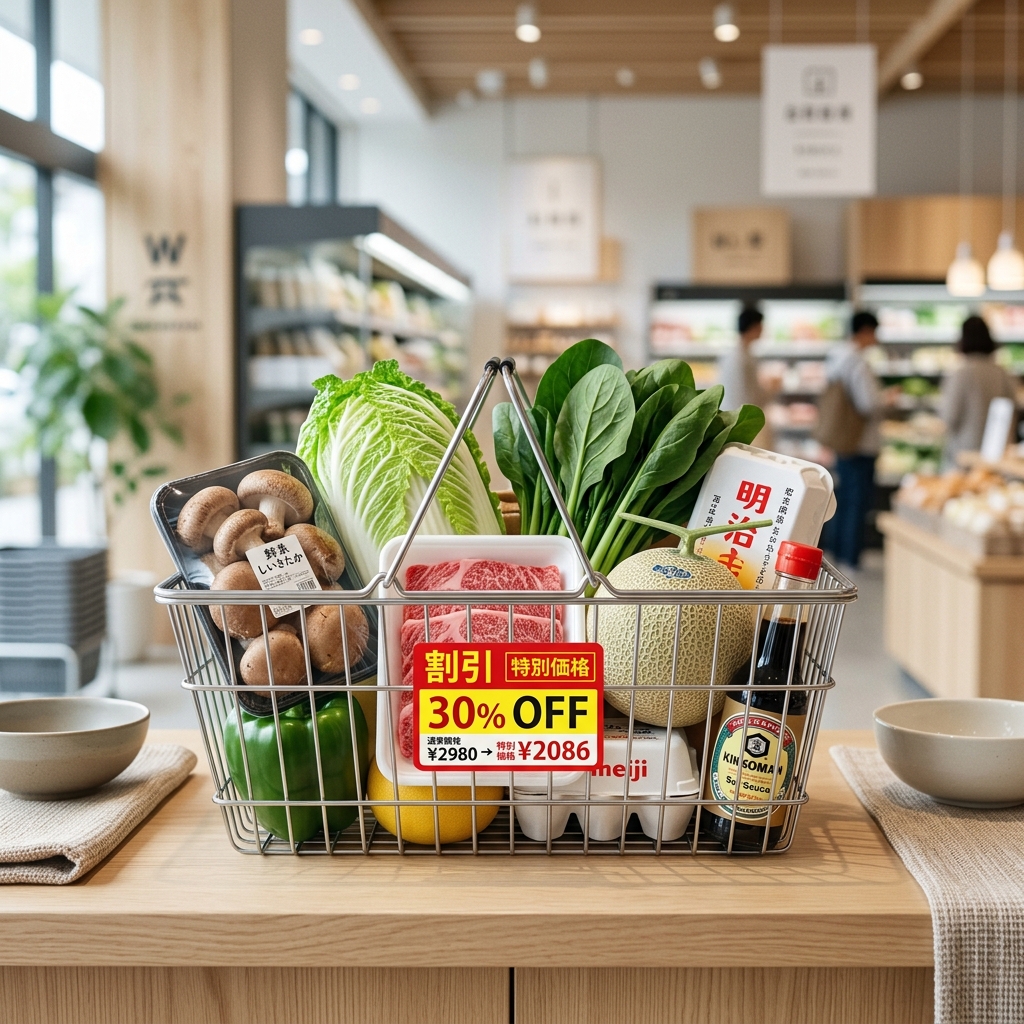
The cost of living in Japan, particularly in major cities like Tokyo and Osaka, can quickly add up if you eat out for every meal. For international students and expats, cooking at home is the most effective way to keep your monthly budget under control. However, walking into a Japanese supermarket for the first time can be overwhelming. From deciphering kanji labels to understanding pricing, shopping smart takes practice. Here are the ultimate supermarket hacks to save money on groceries in Japan.
Quick-Reference: Understanding Supermarket Discount Stickers
Supermarkets discount fresh food, bento boxes, and sushi daily to clear inventory before closing. Look out for these stickers:
| Sticker Kanji | Pronunciation | Meaning / Discount Value | Best Time to Find |
|---|---|---|---|
| 〇%引き | ... percent biki | Percent off (e.g., 10%引き is 10% off, 20%引き is 20% off) | Late afternoon (around 5:00 PM - 7:00 PM) |
| 〇円引き | ... en biki | Yen amount off (e.g., 50円引き is 50 JPY off the total price) | Afternoon (around 3:00 PM - 5:00 PM) |
| 半額 | Hangaku | Half Price (50% off the original price) | 1 to 2 hours before store closing (usually 7:30 PM - 9:00 PM) |
| お買得品 | Okaidokuhin | Special bargain / Value item | All day (usually placed on bulk packs or seasonal items) |
1. The Half-Price Sticker Run (Hangaku)
One of the most famous budget hacks in Japan is shopping for discounted ready-made meals (Osōzai), bento boxes, sashimi, and meat. As the evening progresses, supermarket staff walk around the aisles applying discount stickers. The ultimate prize is the red and yellow 半額 (Hangaku) sticker, which slashes the price in half.
Pro Tip: Timing is everything. Visit your local supermarket roughly 1 to 2 hours before closing (or around 7 PM to 8 PM for 24-hour supermarkets). You will often see a small crowd of budget-conscious shoppers following the staff member with the sticker gun.
2. Shop at Cheap Supermarket Chains
Not all Japanese supermarkets are priced equally. Avoid department store basements (Depachika) or high-end supermarkets like Kinokuniya if you are on a budget. Instead, look for discount supermarket chains:
- Gyomu Super: Famous for bulk items, frozen vegetables, and cheap imported goods. Ideal for buying pantry staples.
- OK Store: Known for high-quality meats and groceries at deep discount prices. They offer a membership card for additional discounts.
- Hanamasa: A wholesale meat market open to the public. Excellent for buying chicken, pork, and beef in bulk.
3. Sign Up for Point Cards and Bring Your Own Bag
Almost every supermarket chain has a point card (Pointo Kado) or mobile app. You earn points for every yen spent, which can be redeemed as cash on future purchases. Additionally, plastic shopping bags in Japan cost between 3 to 5 JPY each, so always bring an eco-bag (Eko bagu) to save money and reduce plastic waste.
For guidelines on nutritional labeling and consumer safety in Japan, you can check the official site of the Ministry of Agriculture, Forestry and Fisheries (MAFF).
4. Plan Your Monthly Food Budget with yuzu.help
Groceries will make up a large portion of your monthly expenses. To ensure you do not overspend, use our interactive yuzu.help Budget Calculator. You can adjust your estimated grocery costs, dining out habits, and shopping locations to see how it affects your total cost of living in Japan.
Frequently Asked Questions
Q: What is Gyomu Super and why is it so cheap?
Gyomu Super is a wholesale discount store. It keeps prices low by selling items in bulk, focusing on private label products, and importing goods directly from global suppliers.
Q: Are fruits and vegetables expensive in Japan?
Yes, fresh fruit can be expensive, especially out of season. To save money, buy frozen vegetables at Gyomu Super, and shop at local independent vegetable stands (Yao-ya) rather than major supermarkets.
Q: What does "Zeikomi" and "Zeinuki" mean on price tags?
"Zeikomi" (税込) means the price includes the 8% or 10% consumption tax. "Zeinuki" (税抜) means the price excludes tax, and you will pay more at the cash register.
Q: Can I pay with credit cards at discount supermarkets in Japan?
Most major supermarkets accept credit cards and IC cards (like Suica). However, some ultra-discount stores like OK Store or Gyomu Super may only allow cash or local pay apps for extra discounts.
Q: What is the cheapest protein source in Japanese supermarkets?
Tofu, natto (fermented soybeans), eggs, and chicken breast (Torimune-niku) are incredibly cheap in Japan, making them excellent staples for students.
Q: How do I get an OK Store membership card?
You can ask the cashier at checkout. It costs 200 JPY (no annual fee), and it grants you a 3/103 (approx. 3%) discount on food items when paying with cash or select methods.
Q: What is the best day of the week to shop for deals?
Many supermarkets have specific discount days, such as "double point days" or "Wednesday vegetable specials." Check the store's weekly flyers (Chirashi) near the entrance.
Q: Do supermarkets sell pre-washed rice?
Yes, look for bags labeled "Musenmai" (無洗米). This rice does not need to be rinsed before cooking, saving you time and water.