
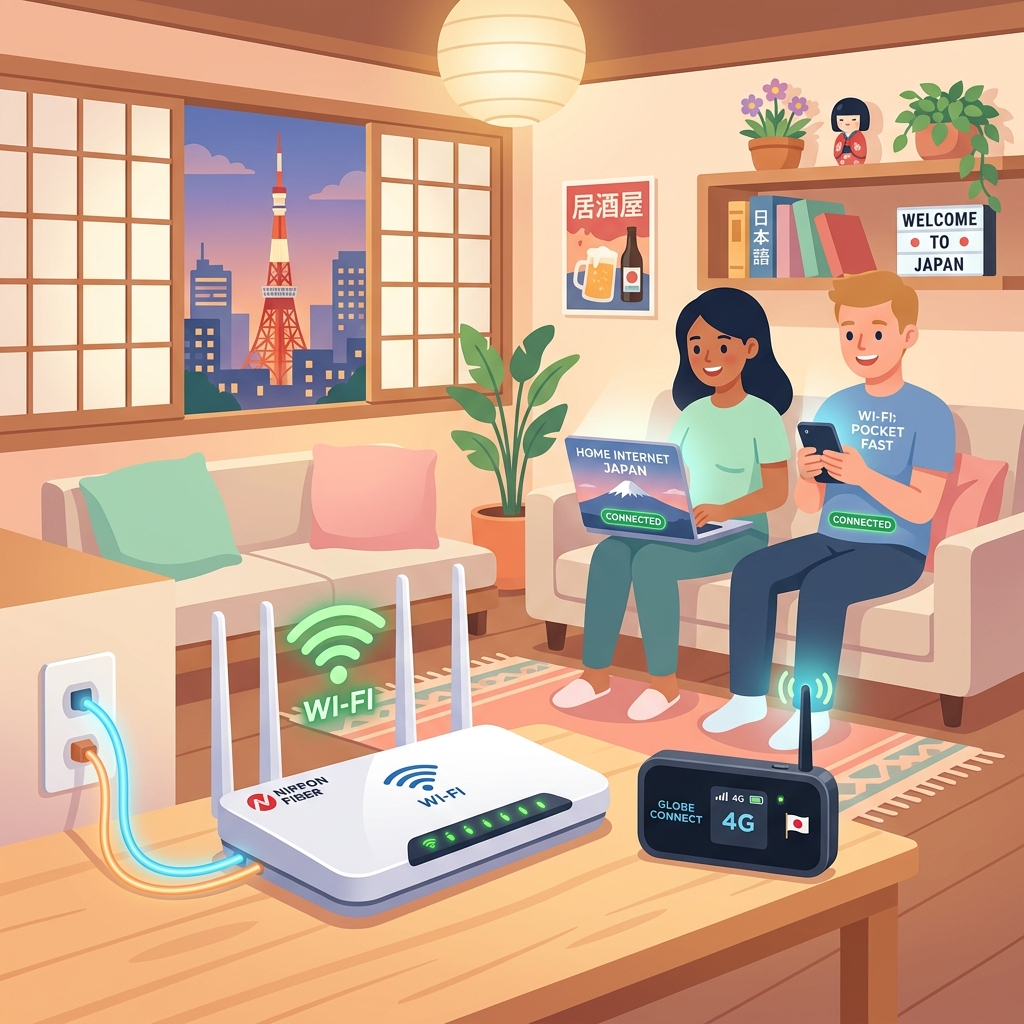
Setting up a reliable internet connection is one of the first priorities when moving into a new apartment in Japan. Whether you are an international student attending online classes, a digital nomad working remotely, or an expat staying in touch with family, having fast and stable Wi-Fi is essential. However, the Japanese internet market can be confusing, with a complex division between fiber line providers and internet service providers (ISPs), long contract periods, high cancellation fees, and language barriers. This guide will walk you through the three main types of internet in Japan, compare English-friendly options, and help you select the best setup for your budget and housing situation.
1. The Three Main Types of Internet in Japan
Depending on your apartment type, contract length, and usage requirements, you will choose one of these three options:
| Option | Average Speed | Pros | Cons |
|---|---|---|---|
| Fiber Optic (Hikari - 光回線) | 1 Gbps - 10 Gbps | Fastest, most stable, unlimited data. | Requires physical installation, long wait times, 2-year contracts. |
| Home 5G Router (Home L01 / Air) | 200 Mbps - 500 Mbps | Plugs into wall, no installation needed, unlimited data. | Speeds drop during peak evening hours, requires buying/renting the device. |
| Pocket Wi-Fi (Mobile Router) | 30 Mbps - 100 Mbps | Portable, instant setup, no contract options available. | Data caps (e.g., 100GB/month), slower speeds, battery life limits. |
2. Fiber Optic Internet (Hikari) Explained
If you play online games, stream 4K video, or work with large files, Hikari (光回線) is the best choice. In Japan, fiber lines are usually owned by NTT, but you purchase service from an Internet Service Provider (ISP) or a combined "provider + line" package (known as *Hikari Collaboration*).
Key Considerations for Fiber Setup
- Installation Check: Before applying, ask your landlord or real estate agent if the building already has fiber lines installed (Hikari Kaisen-ari). If it does, setup takes about 1-2 weeks. If not, you will need a technician to drill and install the line, which requires landlord permission and can take 1 to 2 months.
- Contract Length: Most Hikari contracts are 2-year agreements. Canceling before the renewal month (koushin-tsuki) will trigger a cancellation fee of around 10,000 JPY to 15,000 JPY, and you may have to pay off the remaining balance of the installation fee.
Popular Fiber Providers
- Docomo Hikari / SoftBank Hikari: Great if you have a mobile plan with these carriers, as they offer bundle discounts on your monthly phone bill.
- NURO Hikari: Runs on a proprietary high-speed network (up to 2 Gbps download). Excellent for heavy users, but availability is restricted to specific regions and apartments.
3. Home 5G Routers: The Easiest Home Setup
If your landlord does not allow drilling for fiber lines, or if you do not want to wait months for installation, a Home 5G Router (such as *Docomo Home 5G* or *SoftBank Air*) is an excellent compromise.
- Plug & Play: Once you receive the device, you simply plug it into a standard wall power outlet. It connects to nearby cell towers and broadcasts Wi-Fi instantly.
- Data Limits: While advertised as "unlimited," carriers may temporarily throttle your speed during peak evening hours if you consume massive amounts of data in a short period.
- Device Costs: You will either rent the router or purchase it via monthly installments. Many providers offer a discount that covers the installment fee if you stay for 36 months, but canceling early means paying off the remaining device balance.
4. Pocket Wi-Fi: Best for Students & Short-Term Stays
For language school students staying for 6 to 12 months, or expats living in shared housing, Pocket Wi-Fi is the most popular choice.
- Portability: You can carry the battery-powered device in your bag, giving you stable Wi-Fi on trains, at university, or while traveling.
- No-Contract Plans: Many expat-focused providers offer monthly rolling contracts with zero cancellation fees, which is ideal if you are unsure of your exact departure date.
- Data Caps: Pocket Wi-Fi plans usually have caps (e.g., 50GB, 100GB, or 3GB per day limits). Make sure to choose a plan that covers your typical monthly usage.
5. English-Friendly Providers for Expats
Signing up for internet at a Japanese electronics store (like Yodobashi Camera or Bic Camera) can be challenging without advanced Japanese. Fortunately, several providers cater specifically to foreigners with English support, foreign credit card acceptance, and no-contract options:
- Sakura Mobile: Widely used by students. They offer both Pocket Wi-Fi and Hikari Fiber plans with full English customer support, easy online applications, and compatibility with foreign credit cards.
- Mobal: Known for SIM cards, they also offer simple Pocket Wi-Fi plans with no long-term contracts and English support.
- Asahi Net: A traditional Japanese ISP that has offered reliable English-language signup and technical support for decades, making it a great choice for Hikari fiber contracts.
Conclusion
Choosing the right internet depends on your housing permission and contract duration. If you are staying long-term in an apartment that already has fiber ports, go with Hikari Fiber for the best performance. If you want a quick home setup without installation, opt for a Home 5G Router. If you are on a short-term student visa or need internet on the go, Pocket Wi-Fi is your best bet. Research your options, check contract terms carefully, and enjoy high-speed browsing in Japan!